Salmon Panang Curry
If you’re looking for a dish that brings the vibrant flavors of Thai cuisine right into your kitchen, look no further than this Salmon Panang Curry. A harmonious blend of creamy coconut milk, fragrant spices, and tender salmon, this dish is both comforting and exotic. It’s perfect for a cozy dinner or when you want to impress your guests with something special yet simple. Let’s dive into the details of this scrumptious dish!
Why This Recipe Is Reliable
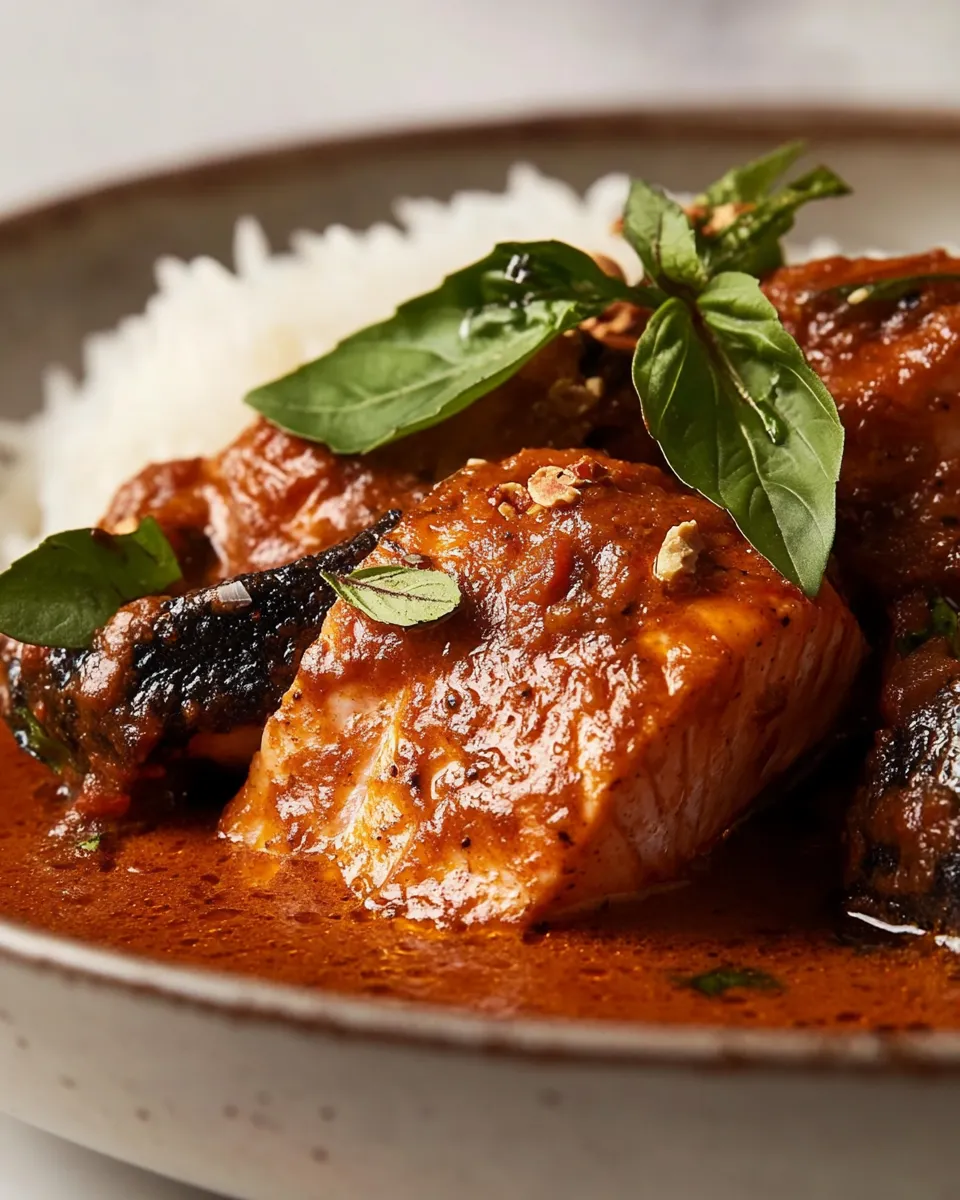
This Salmon Panang Curry is not only straightforward to prepare but also incredibly forgiving. The combination of fresh vegetables, aromatic spices, and silky coconut milk ensures that even if you’re a novice in the kitchen, you will achieve a delicious result. Plus, it’s adaptable—feel free to substitute ingredients based on what you have on hand. The balance of flavors is achieved through the use of Panang curry paste, which is a robust blend of spices that creates a rich sauce without requiring extensive prep time.
The Ingredient Lineup
To make this delightful dish, you will need the following ingredients:
- 1 tbsp oil for frying
- 1 cup long beans cut into 2-inch pieces
- 1 cup carrot slices (0.2-inch thick)
- 1 red onion cut in wedges
- 1 cup shiitake mushrooms sliced
- 6 tbsp Panang curry paste (Mae Ploy brand recommended)
- 1 tbsp palm sugar
- 8 kaffir lime leaves torn
- 3 Thai bird’s eye chilies chopped
- 3 tsp fish sauce
- 3 cups coconut milk
- 1 tbsp lime juice
- 1 tsp salt
- 1 cup unsalted chicken stock
- 24 oz salmon fillet (skin on, 4 fillets)
- 1 cup Thai basil leaves roughly torn
- ½ cup roasted peanuts chopped, for topping
- Extra Thai basil leaves for garnish
Equipment Breakdown
Before we start cooking, make sure you have the following equipment handy:
- Large skillet or wok: Ideal for cooking everything in one pan.
- Wooden spoon: Perfect for stirring and preventing scratches on your cookware.
- Measuring cups and spoons: For precise ingredient measurement.
- Knife and cutting board: Essential for chopping vegetables and preparing your salmon.
Step-by-Step: Salmon Panang Curry
Step 1: Prepare Your Ingredients
Start by preparing all your vegetables. Cut the long beans into 2-inch pieces, slice the carrots, and chop the red onion into wedges. Clean and slice the shiitake mushrooms, and set everything aside.
Step 2: Sauté the Aromatics
In your large skillet or wok, heat the 1 tbsp oil over medium heat. Add the red onion and sauté for 2-3 minutes until they start to soften. Next, toss in the chopped Thai bird’s eye chilies and the sliced shiitake mushrooms. Cook for another 2 minutes until the mushrooms are tender.
Step 3: Add the Curry Paste
Stir in the 6 tbsp Panang curry paste and 1 tbsp palm sugar, mixing well to coat the onions and mushrooms. Cook for about 1-2 minutes until the paste is fragrant.
Step 4: Incorporate the Coconut Milk
Pour in the 3 cups coconut milk slowly, stirring continuously to combine it with the curry paste. Bring the mixture to a gentle simmer.
Step 5: Add the Vegetables
Add the 1 cup long beans and 1 cup carrot slices to the skillet. Stir well, allowing the vegetables to cook for about 5-6 minutes until they are tender but still crisp.
Step 6: Season the Curry
Tear the 8 kaffir lime leaves and add them to the curry along with the 3 tsp fish sauce, 1 tbsp lime juice, and 1 tsp salt. Stir to combine all the flavors.
Step 7: Cook the Salmon
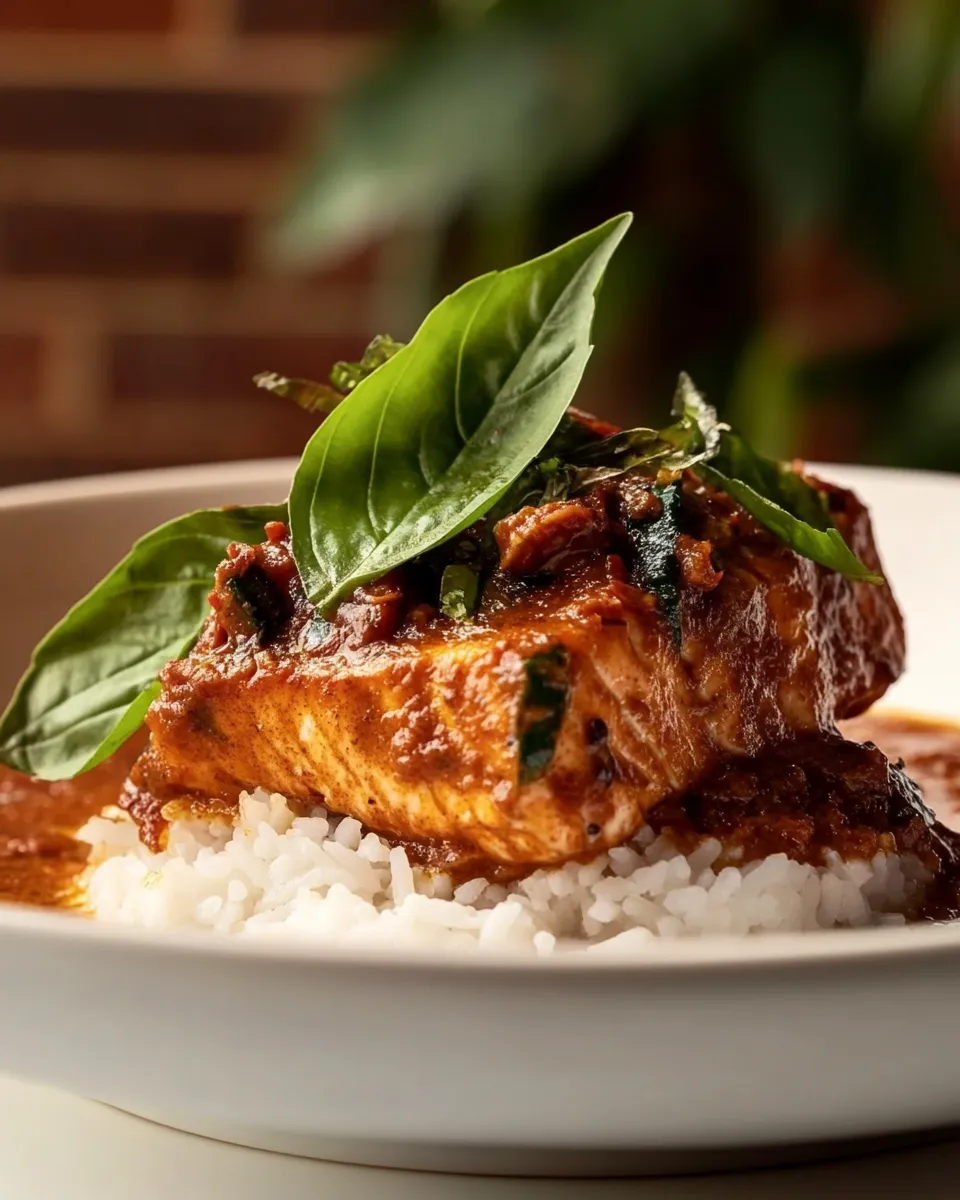
Gently place the 24 oz salmon fillets skin-side down into the curry. Spoon some of the sauce over the top and cover the skillet. Allow the salmon to poach in the curry for about 10-12 minutes, or until cooked through.
Step 8: Serve and Garnish
Once the salmon is cooked, remove the skillet from heat. Sprinkle with 1 cup Thai basil leaves and ½ cup roasted peanuts. Serve hot, garnished with extra Thai basil leaves for a fresh touch.
Make It Fit Your Plan
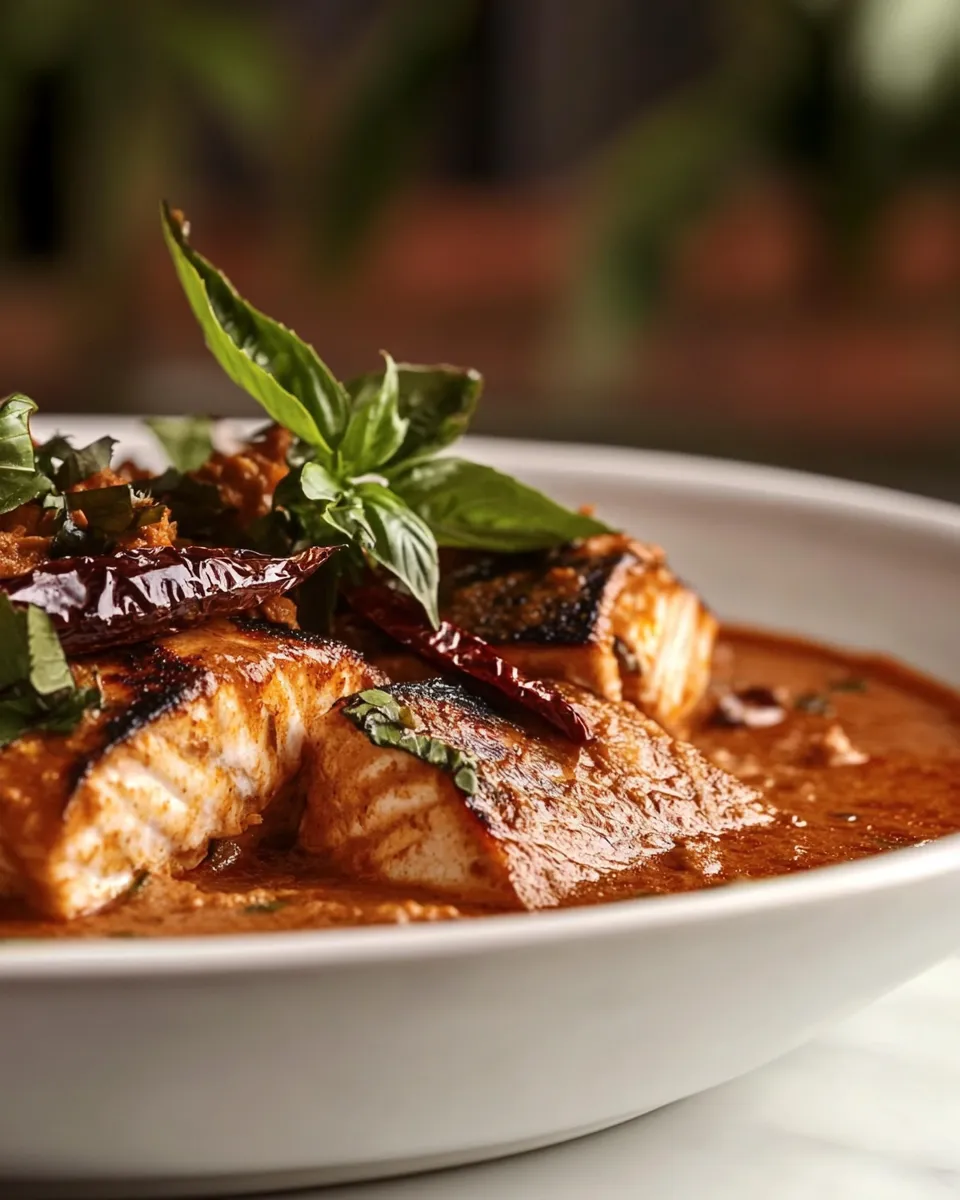
This Salmon Panang Curry can easily be adapted to suit your dietary preferences:
- Vegetarian Version: Substitute salmon with tofu or tempeh for a plant-based option.
- Low-Carb Option: Skip the carrots and beans, and add more leafy greens like spinach or kale.
- Spicy Level: Adjust the number of Thai bird’s eye chilies according to your heat preference.
- Nut-Free: Omit the roasted peanuts or replace them with sunflower seeds.
Easy-to-Miss Gotchas
- Be cautious with the salt—fish sauce can be quite salty, so taste the curry before adding more.
- Make sure to use fresh ingredients for the best flavor—especially the Thai basil and lime.
- Don’t overcook the salmon; it should be flaky yet moist.
- Store leftover curry in an airtight container in the fridge for up to 3 days.
Freezer-Friendly Notes
This Salmon Panang Curry can be frozen if you have leftovers. Let it cool completely before transferring it to freezer-safe containers. It will last for up to 3 months in the freezer. To reheat, thaw in the refrigerator overnight and then warm it gently on the stove, adding a splash of coconut milk if needed to bring it back to life.
Your Questions, Answered
Can I use different types of fish?
Absolutely! Other types of firm fish like cod or halibut work wonderfully in this recipe. Just adjust the cooking time based on the thickness of the fillets.
Is Panang curry paste gluten-free?
Most Panang curry pastes are gluten-free, but it’s always best to check the label. Look for brands that specifically state they are gluten-free if you have dietary restrictions.
What can I serve with Salmon Panang Curry?
This dish pairs beautifully with jasmine rice or quinoa. You could also serve it alongside a fresh salad or even Moroccan Spiced Carrots for a delightful contrast.
How do I store leftovers?
Store any leftover curry in an airtight container in the refrigerator for up to 3 days. Reheat gently on the stove or in the microwave.
One Pan, More Ideas
- Mango Salsa: A refreshing side that complements the rich flavors of Panang curry.
- Coconut Lime Waffles Recipe: Perfect for brunch or dessert with a tropical twist.
Final Thoughts
This Salmon Panang Curry is the epitome of comfort food with a twist. The creamy coconut milk envelops the flavors of the spices, while the salmon remains tender and succulent. Each bite is a delightful journey through the rich culinary traditions of Thailand, making it a stellar choice for any occasion. Whether you’re cooking for yourself or hosting a gathering, this dish is sure to impress. Enjoy the beautiful medley of flavors and the satisfaction of creating something truly delicious!
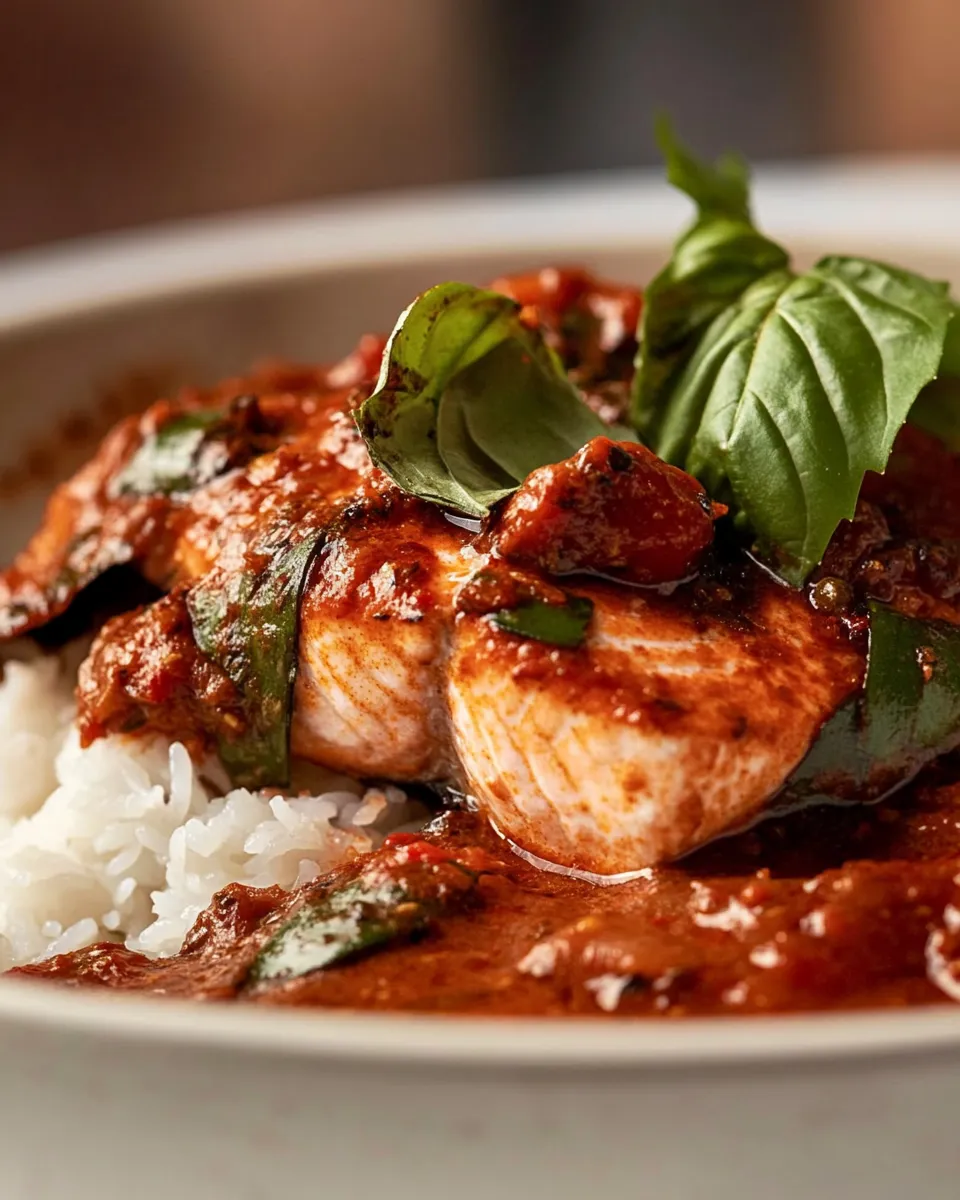
Salmon Panang Curry
Ingredients
Equipment
Method
- Start by preparing all your vegetables. Cut the long beans into 2-inch pieces, slice the carrots, and chop the red onion into wedges. Clean and slice the shiitake mushrooms, and set everything aside.
- In your large skillet or wok, heat the 1 tbsp oil over medium heat. Add the red onion and sauté for 2-3 minutes until they start to soften. Next, toss in the chopped Thai bird's eye chilies and the sliced shiitake mushrooms. Cook for another 2 minutes until the mushrooms are tender.
- Stir in the 6 tbsp Panang curry paste and 1 tbsp palm sugar, mixing well to coat the onions and mushrooms. Cook for about 1-2 minutes until the paste is fragrant.
- Pour in the 3 cups coconut milk slowly, stirring continuously to combine it with the curry paste. Bring the mixture to a gentle simmer.
- Add the 1 cup long beans and 1 cup carrot slices to the skillet. Stir well, allowing the vegetables to cook for about 5-6 minutes until they are tender but still crisp.
- Tear the 8 kaffir lime leaves and add them to the curry along with the 3 tsp fish sauce, 1 tbsp lime juice, and 1 tsp salt. Stir to combine all the flavors.
- Gently place the 24 oz salmon fillets skin-side down into the curry. Spoon some of the sauce over the top and cover the skillet. Allow the salmon to poach in the curry for about 10-12 minutes, or until cooked through.
- Once the salmon is cooked, remove the skillet from heat. Sprinkle with 1 cup Thai basil leaves and ½ cup roasted peanuts. Serve hot, garnished with extra Thai basil leaves for a fresh touch.
Notes
- Be cautious with the salt—fish sauce can be quite salty, so taste the curry before adding more.
- Use fresh ingredients for the best flavor—especially the Thai basil and lime.
- Don't overcook the salmon; it should be flaky yet moist.
- Store leftover curry in an airtight container in the fridge for up to 3 days.
- This dish pairs beautifully with jasmine rice or quinoa.