Red Curry Paste
Red curry paste is a vibrant and aromatic blend that forms the backbone of many delicious dishes in Thai cuisine. It’s a magical mixture that brings depth and complexity to your meals, transforming simple ingredients into a culinary adventure. Whether you’re looking to whip up a quick curry, enhance a stir-fry, or create an unforgettable sauce, this homemade red curry paste is the key to unlocking flavors that will tantalize your taste buds. Let’s dive into the world of red curry paste and learn how to make it from scratch!
Why This Recipe Works
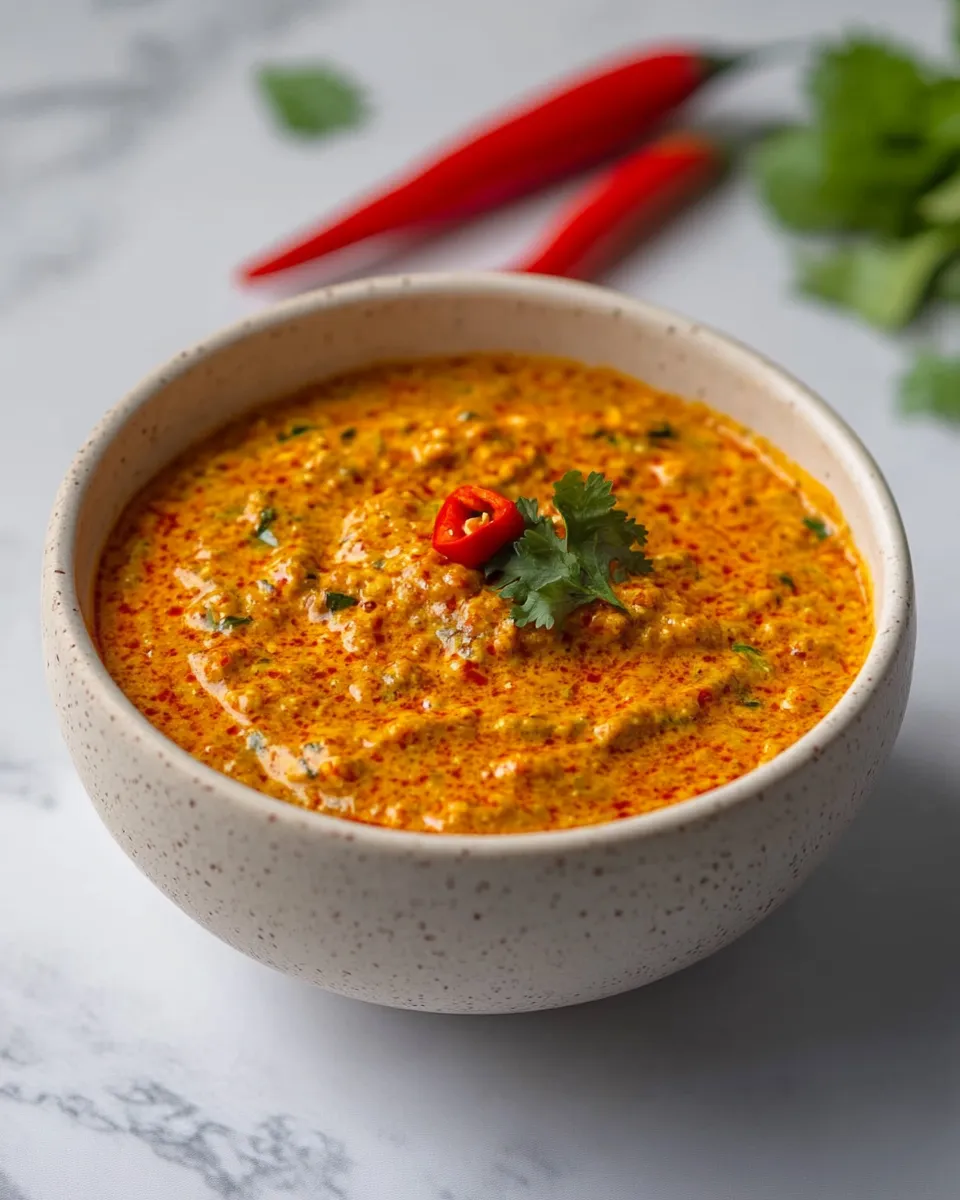
This recipe for red curry paste is straightforward yet profoundly impactful. It leverages fresh ingredients that you can often find in your local grocery store or Asian market, ensuring that your paste is packed with authentic flavor. By making your own paste, you control the heat level and the freshness of the spices, which significantly enhances the overall taste of your dishes. The combination of spices, aromatics, and fresh herbs creates a harmonious balance that is both spicy and fragrant, perfect for a variety of meals.
What’s in the Bowl
Creating your own red curry paste requires a handful of fresh and aromatic ingredients. Here’s what you’ll need:
- 1 small red bell pepper, seeds removed and diced
- 3 medium red chilies, chopped
- 1 stalk lemongrass, root and tip trimmed, chopped
- 1 ½ teaspoons ground ginger
- 3 cloves garlic, peeled
- 1 teaspoon ground cumin
- 1 ¼ teaspoons ground turmeric
- ½ teaspoon ground coriander
- ½ teaspoon ground black pepper
- ½ teaspoon kosher salt
- 2 tablespoons lemon juice
- 1 medium lime, zested and juiced
- 5 stalks green onions, sliced
- 1 tablespoon avocado oil
- 2 teaspoons coconut sugar (optional)
Each ingredient plays a crucial role in building the flavor profile of your red curry paste, ensuring a depth that’s hard to achieve with store-bought varieties.
Appliances & Accessories
To make your red curry paste, you’ll need a few essential tools:
- Food Processor or Blender: This will blend all the ingredients into a smooth paste.
- Knife: For chopping the vegetables and herbs.
- Cutting Board: A stable surface for chopping.
- Measuring Spoons: For accurate measurements of your spices and liquids.
- Storage Container: To keep your paste fresh in the fridge.
These tools will make your preparation process quick and easy, allowing you to focus on creating that delightful paste.
Build Red Curry Paste Step by Step
Step 1: Prepare Your Ingredients
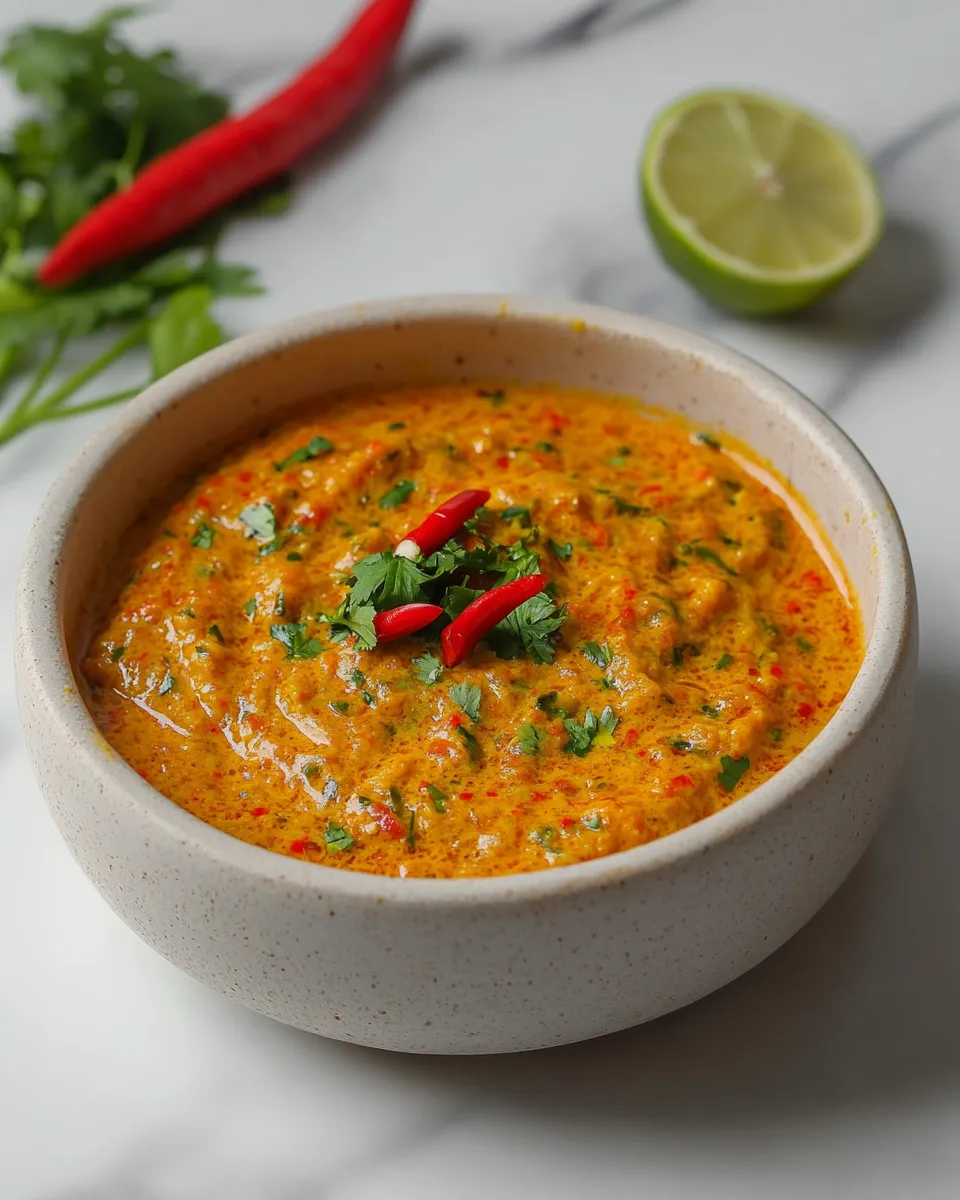
Start by washing and prepping all your ingredients. Remove the seeds from the red bell pepper and chop it into small pieces. Do the same with the red chilies, ensuring you can control the heat level by adjusting the number of chilies you use.
Step 2: Chop Aromatics
Chop the lemongrass into small pieces as well. This highly aromatic herb is vital for authentic flavor. Peel the garlic cloves and set them aside.
Step 3: Combine Ingredients in Processor
In your food processor, add the diced red bell pepper, chopped red chilies, lemongrass, ground ginger, garlic, ground cumin, ground turmeric, ground coriander, ground black pepper, kosher salt, lemon juice, lime zest, lime juice, and sliced green onions.
Step 4: Blend Until Smooth
Drizzle in the avocado oil and blend everything together until you reach a smooth and cohesive paste. You may need to scrape down the sides of the bowl a couple of times to ensure everything is well blended.
Step 5: Taste and Adjust
Taste your paste and adjust any flavors as needed. If you prefer a slightly sweeter taste, add the optional coconut sugar. Blend again to incorporate.
Step 6: Store Your Curry Paste
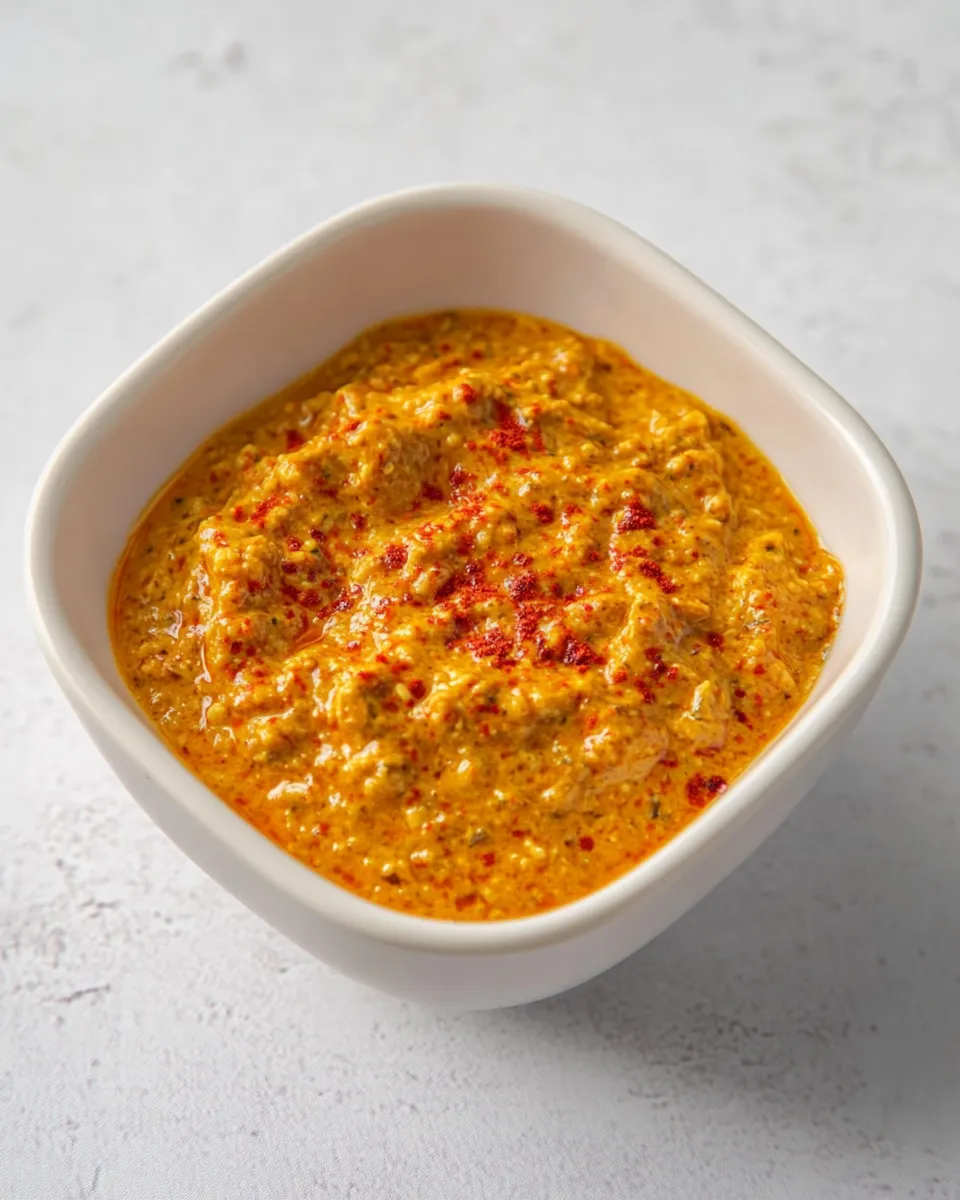
Transfer the red curry paste to an airtight container. It can be stored in the refrigerator for up to two weeks or in the freezer for up to three months.
What to Use Instead
If you find yourself missing some ingredients, consider these alternatives:
- Red Bell Pepper: Use yellow or orange bell peppers for a sweeter flavor.
- Lemongrass: Substitute with lime zest or a few drops of lemon grass oil.
- Ground Spices: Freshly ground spices will provide a more robust flavor if you have them on hand.
- Avocado Oil: Olive oil or coconut oil can work as alternatives.
These substitutions can help you make the red curry paste even if you’re missing a few key ingredients.
Flavor Logic
The beauty of red curry paste lies in its harmonious blend of flavors. Here’s how each component contributes:
- The red bell pepper adds a natural sweetness and color.
- Red chilies provide heat, which can be adjusted based on your preference.
- Lemongrass brings a bright, citrusy note that lifts the entire paste.
- Garlic and ginger add depth and warmth, essential for any curry.
- Ground spices like cumin and turmeric give the paste its signature earthiness.
- The touch of coconut sugar rounds off the flavors, balancing the spice and acidity.
Together, these flavors create a paste that is not only versatile but also rich and complex, making it a perfect base for countless recipes.
Storage & Reheat Guide
To keep your red curry paste fresh and flavorful, follow these storage tips:
Store in an airtight container in the refrigerator for up to two weeks. If you want to keep it longer, portion the paste into ice cube trays and freeze. Once frozen, transfer the cubes to a freezer bag, where they can last up to three months. When you’re ready to use it, simply take out a cube and add it directly to your cooking pot, allowing it to melt into your dish.
Common Questions
Can I make a milder version of red curry paste?
Absolutely! You can reduce the number of red chilies or use milder chili varieties to achieve the desired heat level.
Can I use store-bought red curry paste instead?
Yes, store-bought paste is a convenient option, but making it from scratch allows for fresher flavors and customization.
How can I use red curry paste in my cooking?
Red curry paste is incredibly versatile. Use it as a base for soups, stews, or sauces, or mix it with coconut milk for a traditional curry dish. It can also be used in marinades or to flavor rice and noodles.
Can I adjust the spices in the recipe?
Definitely! Feel free to play around with the spices based on your taste preferences. Adding more cumin or coriander can enhance the flavor profile to your liking.
You Might Also Like
Serve & Enjoy
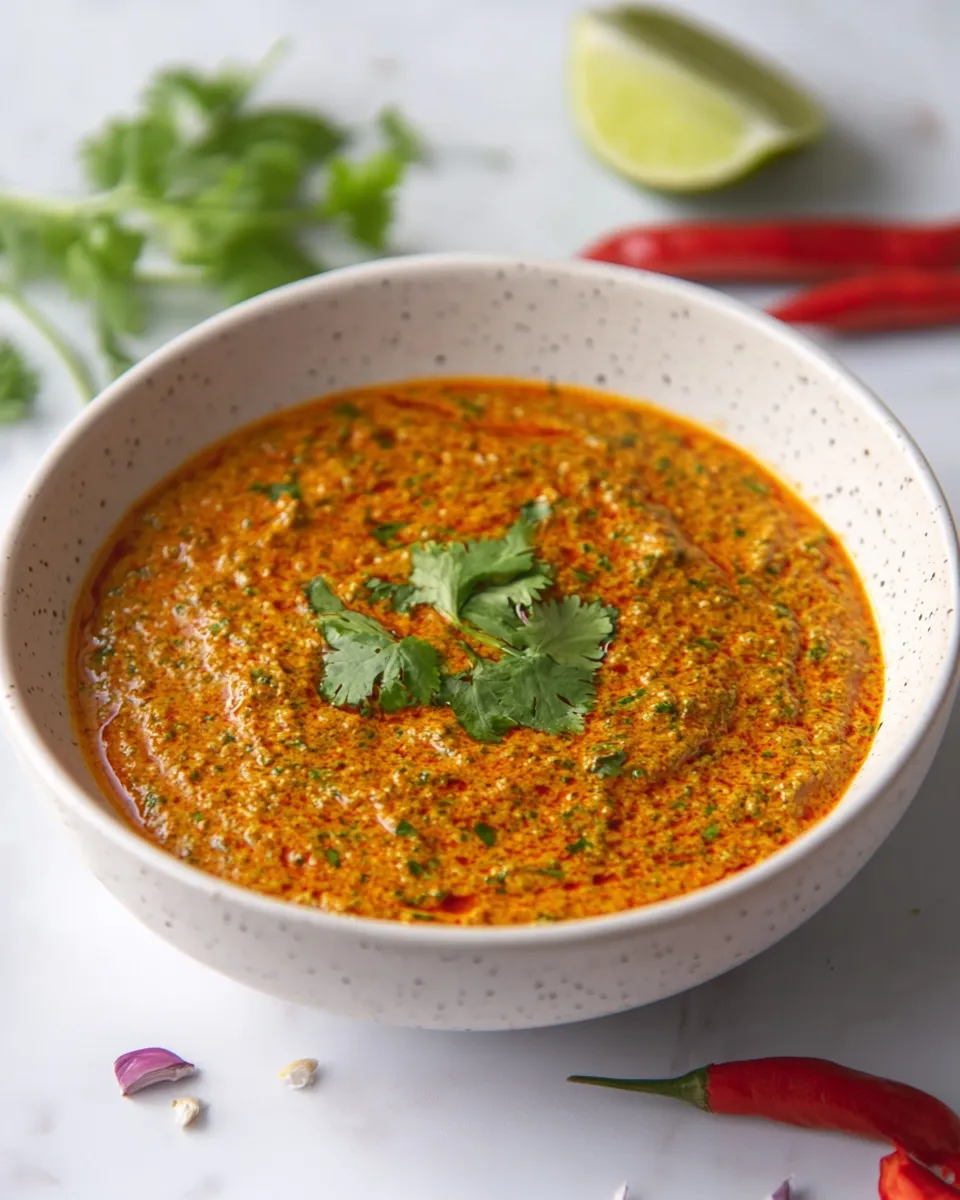
Now that you’ve crafted your very own red curry paste, the possibilities are endless! Use it to create a fragrant curry with your choice of protein and vegetables, stir it into a soup for an extra kick, or even use it to marinate your favorite meats. Pair your dishes with jasmine rice or naan for a complete meal that will impress friends and family alike.
In conclusion, making red curry paste at home is not only rewarding but also a delicious way to bring a taste of Thailand into your kitchen. The fresh ingredients and robust flavors will elevate your cooking and inspire you to explore the diverse world of Thai cuisine. Get ready to enjoy the delightful aroma and taste that this homemade red curry paste will bring to your meals!
Red Curry Paste
Ingredients
Equipment
Method
- Start by washing and prepping all your ingredients. Remove the seeds from the red bell pepper and chop it into small pieces.
- Chop the lemongrass into small pieces. Peel the garlic cloves and set them aside.
- In your food processor, add the diced red bell pepper, chopped red chilies, lemongrass, ground ginger, garlic, ground cumin, ground turmeric, ground coriander, ground black pepper, kosher salt, lemon juice, lime zest, lime juice, and sliced green onions.
- Drizzle in the avocado oil and blend everything together until you reach a smooth and cohesive paste. You may need to scrape down the sides of the bowl a couple of times.
- Taste your paste and adjust any flavors as needed. If you prefer a slightly sweeter taste, add the optional coconut sugar. Blend again to incorporate.
- Transfer the red curry paste to an airtight container. It can be stored in the refrigerator for up to two weeks or in the freezer for up to three months.
Notes
- Store in an airtight container in the refrigerator for up to two weeks.
- For longer storage, freeze in ice cube trays for up to three months.
- Adjust the heat level by varying the number of red chilies used.